
PROTECTION • PREVENTION • PEACE OF MIND
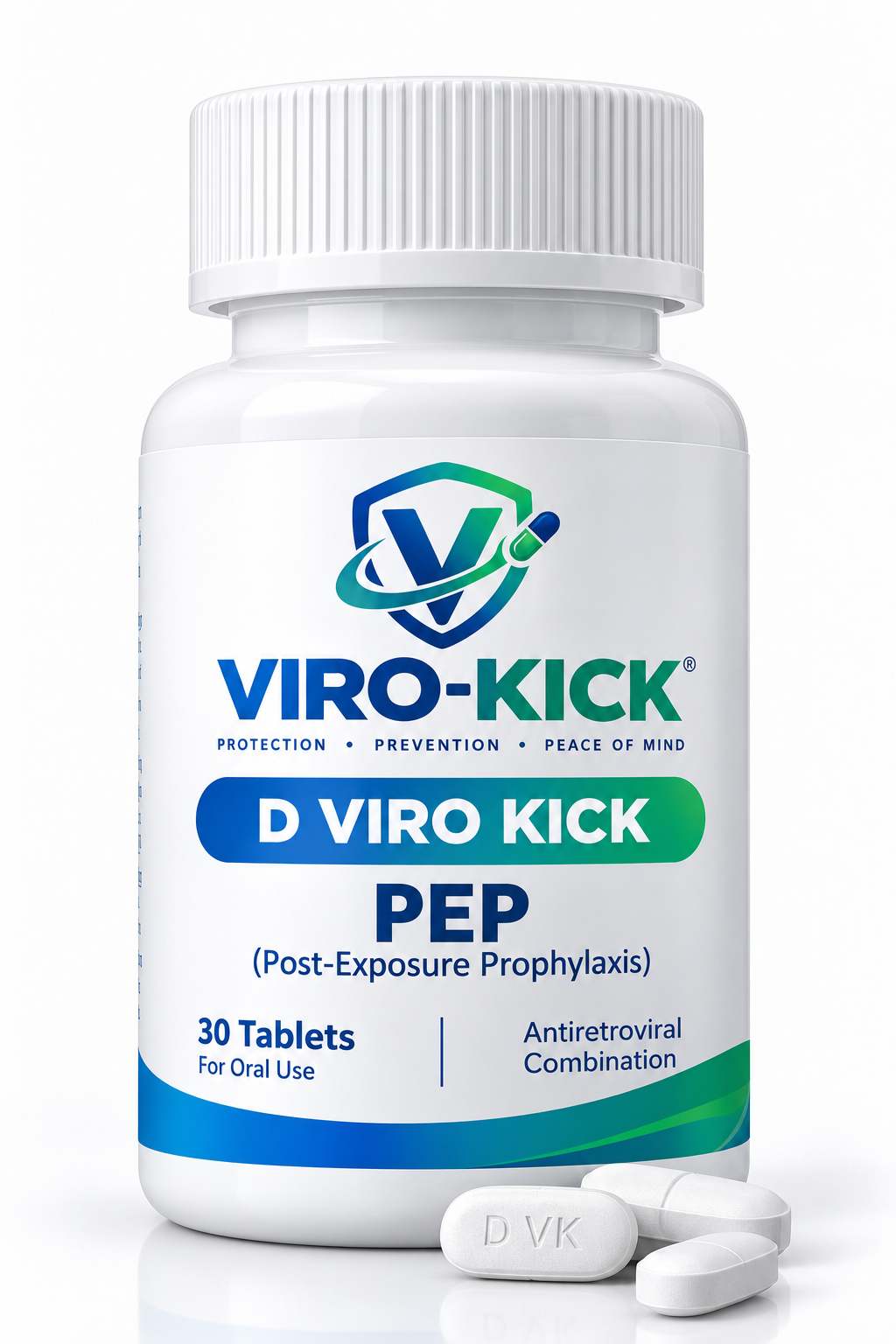
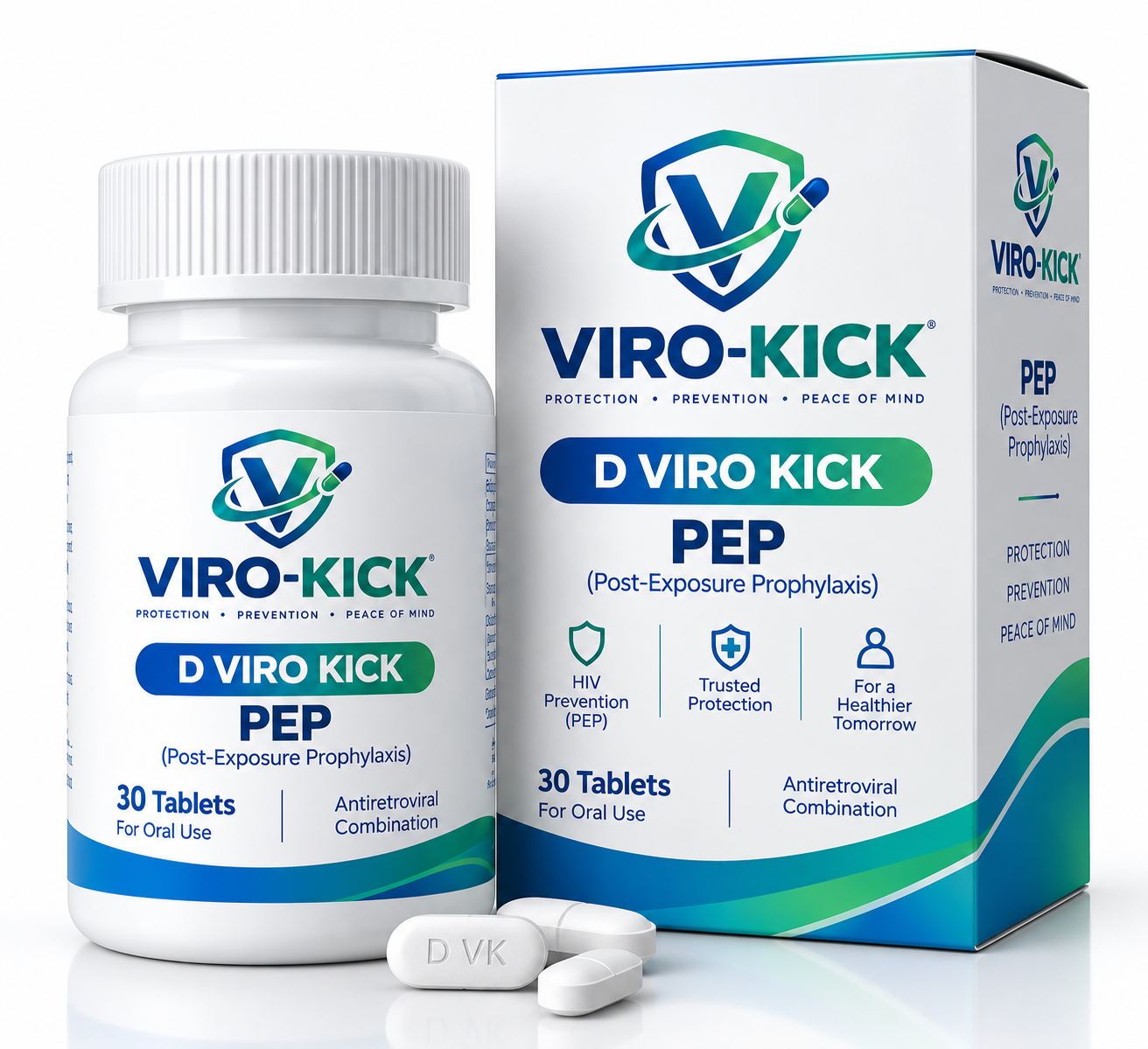
D VIRO KICK PEP
Post-Exposure Prophylaxis — important information about urgent HIV prevention after a possible exposure.
D VIRO KICK | HIV PREVENTION
Understanding D VIRO KICK PEP
D VIRO KICK PEP is presented as a branded product for post-exposure prophylaxis. PEP is a time-sensitive medical approach that uses antiretroviral medicines to reduce the chance of acquiring HIV after certain potential exposures. The specific D VIRO KICK formulation and regulatory status must be verified against official product documentation.
Every Hour Matters
PEP should begin as soon as possible, ideally within 24 hours and no later than 72 hours after a qualifying HIV exposure. Seek urgent medical assessment immediately.
What is PEP?
PEP stands for Post-Exposure Prophylaxis. It is prescribed after a possible HIV exposure, following a clinician’s risk assessment. It is not a substitute for regular HIV prevention.
When might PEP be considered?
Examples include certain condomless sexual exposures, condom failure, needle-sharing incidents and occupational needlestick injuries. A clinician determines whether PEP is indicated.
EMERGENCY PREVENTION
When Should PEP Start?
Start as Soon as Possible
Do not wait for symptoms or a test result. PEP must generally be initiated within 72 hours of a possible HIV exposure; earlier initiation is preferred.
Clinical Assessment First
A qualified healthcare professional assesses exposure risk, HIV status, other health conditions, possible interactions, pregnancy considerations and treatment suitability.
TREATMENT JOURNEY
The Standard 28-Day PEP Course
The information below describes general PEP practice, not verified product-specific dosing for D VIRO KICK.
Seek Care Promptly
Contact an emergency department or qualified clinician without delay. Baseline HIV testing and other assessments are usually arranged, but testing should not unnecessarily delay indicated PEP.
Take Medication Consistently
When prescribed, PEP is normally taken for 28 days. Follow the exact regimen and instructions provided by the prescribing clinician.
Complete Follow-Up
Follow-up HIV testing and review are important even after completing the medication course. Your clinician will explain the testing schedule and next steps.
PATIENT SAFETY
Testing, Side Effects and Follow-Up
Medical Checks
Depending on the circumstances, care may include baseline HIV testing, kidney and liver assessment, hepatitis testing, pregnancy testing and screening for other sexually transmitted infections.
Possible Side Effects
Antiretroviral PEP medicines may cause nausea, fatigue, headache or gastrointestinal symptoms. Effects depend on the actual medicines prescribed. Report concerning symptoms to your clinician.
Follow-Up Testing
Follow-up HIV testing is commonly recommended around 4–6 weeks and 12 weeks after exposure, with timing adjusted to the tests used and the clinician’s guidance.
After PEP
If future HIV exposures are possible, ask your clinician whether PrEP could provide an appropriate ongoing prevention strategy.
KNOW THE DIFFERENCE
PEP and PrEP: What’s the Difference?
Purpose
PEP
Emergency prevention after a potential exposure
PrEP
Prevention before potential exposure
Timing
PEP
Start as soon as possible, within 72 hours
PrEP
Start before ongoing or anticipated risk, under medical guidance
Duration
PEP
Usually 28 days
PrEP
Depends on the prescribed regimen and individual needs
Clinical Care
PEP
Urgent assessment, prescription and follow-up testing
PrEP
Initial assessment, HIV testing and ongoing monitoring
COMMON QUESTIONS
Frequently Asked Questions
Can PEP help after unprotected sex?
It may be recommended after some sexual exposures, depending on HIV risk and timing. Seek urgent medical assessment within 72 hours.
Can I start PEP after 48 hours?
Yes, a clinician may recommend starting PEP within the 72-hour window. Seek care immediately rather than waiting.
Does PEP work after 72 hours?
PEP is generally not recommended when more than 72 hours have passed because effectiveness is not established. Seek medical care for testing and other advice even if the window has passed.
Is PEP 100% effective?
No. PEP can substantially reduce HIV acquisition risk when taken correctly, but it cannot guarantee prevention.
How long is a PEP course?
The standard HIV PEP course is 28 days, unless a clinician advises otherwise based on the circumstances.
Does PEP protect against other STIs?
No. HIV PEP does not prevent other sexually transmitted infections. Ask about appropriate STI testing and care.
What if I miss a dose?
Contact your pharmacist or prescribing clinician promptly for instructions specific to your regimen. Do not double doses unless specifically instructed.
Can I switch from PEP to PrEP?
Yes, some people transition directly from PEP to PrEP after clinical evaluation and appropriate HIV testing, without an unnecessary prevention gap.
TIME MATTERS
Possible HIV Exposure?
Seek urgent medical care immediately. Do not delay while waiting for online support.
Medical disclaimer: This page provides general educational information about HIV post-exposure prophylaxis and does not establish the ingredients, efficacy, approved indications or authorization status of any D VIRO KICK product. Product-specific prescribing claims require verification against official regulatory and manufacturer documentation. PEP requires assessment and monitoring by a qualified clinician.
General references: CDC clinical PEP guidance · WHO post-exposure prophylaxis information.
VIRO-KICK
PROTECTION · PREVENTION · PEACE OF MIND
Clear, respectful information to help you understand HIV prevention and find the right next step with a qualified healthcare professional.
Helpful information
© VIRO-KICK · Educational information
PEP and PrEP require assessment by a qualified healthcare professional. Product availability, prescription requirements, and regulatory status must be confirmed with a licensed provider.